
Table of Contents
How much can you get in an Uber or Lyft settlement in California?
Settlement values in rideshare accident cases vary widely based on injury severity, medical bills, lost income, pain and suffering, and fault. In many serious injury claims, where the Uber or Lyft driver has accepted a ride and is en route or carrying a passenger, the company’s commercial liability insurance provides up to $1,000,000 in third-party liability coverage for bodily injury and property damage. The actual settlement amount in your case will depend on the specific facts, documented losses, and applicable insurance coverage.
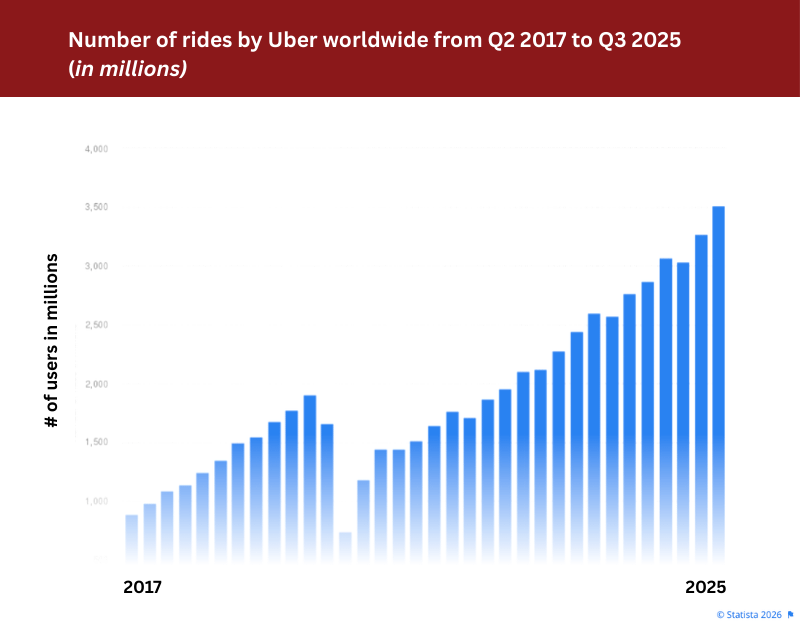
Rideshare accidents in California are on the rise just as the popularity of services like Uber and Lyft has grown. Uber alone has seen the number of mobility trips worldwide increase half a billion from 2023 to 2024.
In the third quarter of 2025, Uber’s ridership worldwide totaled 3.5 billion trips. This compares to around 2.9 billion trips in the third quarter of 2024, representing an increase of 22.5 percent year-on-year.
Key Takeaways
- There are different rules regarding liability, or responsibility, for rideshare accidents.
- Securing a settlement award can be a challenge if you’re unsure who, exactly, is at fault.
- MKP Law Group, LLP works to determine all liable parties in Uber and Lyft accidents, which can help maximize the compensation clients could receive.


The most recent Uber safety report released in 2022 found that there was an increase in the rate of motor vehicle fatalities since their last analysis in 2019-2020, which aligns with national trends. Uber maintains that only 0.0002% of trips experience serious safety problems, with a total of 153 individual motor vehicle fatalities occurring in a one-year period (2021-2022). This is up from 101 motor vehicle fatalities the previous year. What Uber has failed to report are injuries.
The National Bureau of Economic Research (NBER) examined how ridesharing services in cities have impacted the occurrence of fatal traffic accidents. Their findings present a different perspective. They note that (following an earlier trend of a decrease in traffic deaths), since the introduction of ride-hailing services after 2010, traffic fatalities have once again increased among motorists, pedestrians, and pedal cyclists.
While the two major rideshare companies assert excellent safety records, the number of accidents involving their drivers is not zero. Therefore, if you have been involved in an accident involving a rideshare, you need to know how to protect your rights and receive compensation for damages you may be suffering. Let’s walk through the scenarios of car accident settlement basics, legal discussions, and potential damages.
2017-2022 motor vehicle fatality data, Uber-related and United States:
| Year | # of fatalities – Uber | Frequency of fatalities (by # of trips) | % of trips | Rate per 100M VMT – Uber | Rate per 100M VMT – National | Rate change over prior period – Uber | Rate change over prior period – National |
|---|---|---|---|---|---|---|---|
| 2017–2018 | 107 | ~1 in 22,000,000 | 0.000005% | 0.58 | 1.15 | — | — |
| 2019–2020 | 101 | ~1 in 20,000,000 | 0.000005% | 0.62 | 1.22 | +7% | +6% |
| 2021–2022 | 153 | ~1 in 12,000,000 | 0.000008% | 0.87 | 1.35 | +40% | +11% |
Dangers of Being a Rideshare Passenger
In cases of actual accidents involving pedestrians, pedal cyclists, and other motorists, outcomes are on par with the national averages. Injuries may range from minor bruises to extensive head injuries and disabilities. However, there are additional dangers rideshare passengers could experience.
- Dooring. In the rideshare vernacular, dooring refers to a passenger struck by an oncoming vehicle or bicycle while exiting the car.
- Whiplash. Driver behavior or traffic conditions may result in sudden stops and sharp turns, which may cause you to experience whiplash, concussions, or other soft tissue injuries.
- Malfunctioning safety equipment. If there is an accident, you do not know if the rideshare vehicle’s safety equipment is fully functional. Hazards include failing airbags, defective seat belts, or missing headrests.
Rideshare Accident Settlement Basics
A rideshare accident settlement is a financial agreement between you, the injured party (the plaintiff), and the at-fault party (often the rideshare company or its insurance provider). The goal is to compensate you for damages resulting from a rideshare accident. These settlements cover various costs and losses incurred by the injured party. Examples include medical expenses, lost wages, property damage, pain and suffering, and legal fees.
Rideshare Car Accident Injury Settlement Nuances
Before discussing dollars and cents, it is critical to note that rideshare companies differentiate their insurance coverage policies and limits based on between three different periods.
It’s worth mentioning the time when the rideshare app is off, or when an Uber or Lyft driver is not actively working. This is when the driver is not currently accepting passengers, the driver’s personal auto insurance and its limits apply.
Rideshare periods:
- The rideshare app is on. The driver is waiting to get a ride request. Now, the rideshare company brings third-party liability coverage to the table. These are minimum coverage amounts.
- The driver is en route to pick up passengers. Rideshare companies maintain first and third-party coverages with higher limits.
- Passengers are in the car. Again, first and third-party coverages are in effect.
| Rideshare Period | Stage Description | Insurance Coverage |
| n/a | App is Off | Driver’s personal auto insurance applies |
| 1 | App is On (Waiting for a Ride) | Third-party liability from rideshare company with minimum coverage amounts |
| 2 | En Route to Pick Up Passenger | Rideshare company’s first and third-party coverage with higher limits |
| 3 | Passenger in the Car | Rideshare company’s first and third-party coverage with higher limits |
Uber and Lyft are tight-lipped about accident settlement amounts. Experts agree that data is limited, but what is available hints at payouts ranging from $25,000 to $50,000 for Uber. Others say that estimated Lyft settlements range from $300,000 to $1 million and more. The vast disparity between these figures shows that tangible data is difficult to find.
Settlements May Also Come from Other Entities
It is critical to understand that you are not limited to seeking damages from just the rideshare company. A case in point is a Jersey City case when the municipality was held liable for an accident involving an Uber and a Parking Authority vehicle. The City paid $350,000 to the rideshare passengers.
How to Calculate Rideshare Car Accident Settlements
Calculating a rideshare car accident settlement depends, in large part, on your ability to document losses and present evidence. Evidence includes police reports, medical records and bills, proof of your income, witness statements, and proof of your income (if you claim lost wages).
Next, sum up the economic damages you currently have and those that you anticipate for the future. Add in future medical care, loss of future earning capacity at your current job, and the cost of repairing or replacing your personal property.
Non-economic damages, such as pain and suffering, may also be included in a settlement calculation. Here, you would use a multiplier that multiplies the sum total of your economic damage by the severity (one to five) of your injury. This highly subjective figure frequently becomes the reason for lengthy negotiations.
Remember to factor in liability. Your settlement figure may go up or down depending on whose fault the accident was or whether there is partial fault on both sides. Because there are so many moving parts in the settlement negotiations, the importance of legal representation in calculations and actual discussions with the defendant cannot be overstated.
Understanding California’s Personal Injury Law
In addition to understanding the insurance intricacies of rideshare companies, California’s personal injury law also governs aspects of your case. It specifies that you have two years from the date of the injury to file your claim. This is called the statute of limitations, and it is critical that you abide by it. Moreover, remember to sue in the county where you were injured or the defendant does business.
The goal of any car accident settlement is to reach a legally binding agreement between you and the defendant before you head to court. It requires excellent negotiation skills because the defendant’s insurance company will likely start the process with low-ball offers. Would you know how to recognize such an offer as unsuitable?
At this stage, having an attorney on your side makes sense. Because the insurance company is working with its attorneys, it is in a strong position. However, having a lawyer take control of the mediation and negotiation for you levels the playing field.
Involving an Attorney in Your Case
Most rideshare accident victims have little experience filing claims or negotiating settlements in accident cases. Even settlement calculators only sometimes help. An attorney with expertise in rideshare cases can help you determine a fair settlement amount. They will assist with document preparation as well as data collection, and take an active part in the negotiation process.
Many accident victims do not realize that lawyers take on personal injury cases on a contingency basis. You only have to pay the attorney once they achieve a settlement for you. Once you have found an attorney with experience with rideshare accidents, make the most of your initial consultation.
- Come prepared. Bring with you all the documents you have. Examples include the police report, medical bills, records, and any correspondence you received from the insurance company.
- Write down your questions. A free initial consultation goes by remarkably quickly. Know what questions you want to ask ahead of time.
- Visit the attorney’s website. You do not know what you do not know. Visit the attorney’s website before your appointment to read through the information. It may bring up points of discussion you did not even know you should have.
If you bring in an attorney, wait to sign any settlement letter the insurance company sends you regarding your accident claim.
Fault in California Car Accidents and a Closer Look at Punitive Damages
We have discussed how to calculate damages and briefly mentioned fault. It plays a more significant role in settlement negotiations than you might realize. California operates under a “fault” system for car accidents, which means the person found at fault for causing the accident is responsible for the damages incurred by the other parties involved. This system differs from “no-fault” states, where each party’s insurance typically covers their own losses regardless of who caused the accident.
However, “fault” is not always 100 percent. California follows a comparative negligence rule. Each party involved in an accident can be assigned a percentage of fault, and your compensation is reduced by your degree of fault. The at-fault driver’s insurance company compensates the other party’s damages. Both parties’ insurance companies will investigate the accident to determine fault. If there’s disagreement about fault, it may lead to lengthy negotiations or legal proceedings.
What does this look like in practice? Well, the motorist who rear-ends another car is typically considered at fault. However, suppose the driver in the first car suddenly slammed on the brakes for no reason. In that case, there is a case for comparative negligence. An attorney will guide you through any comparative negligence that may be part of your case.
When Are Punitive Damages Awarded?
Earlier, we talked about compensatory damages and how to calculator economic and non-economic damages. In some cases, punitive damages may be added. You may receive punitive damages if the defendant’s conduct was particularly egregious. However, you must prove your cause. Examples include fraud, disregard for your rights, and intentional misconduct.
A case in point is the 2019 Tesla crash, which involved an autopilot defect. A judge allowed the company to be sued for punitive damages, arguing that it knew about the problem and was negligent.
Confused? Don’t be.
When dealing with a rideshare accident, there are several types of law that come into play. You must understand and navigate each one. Follow the timelines when making your claim, calculate an acceptable settlement, and negotiate with the defendant’s insurer.
If you are not a good candidate for handling this process all on your own, enlist the assistance of a rideshare accident lawyer. This professional understands the governing laws, will follow the filing guidelines, and already has experience negotiating with companies that want to save money on payouts. Even if you are unsure that you want to hire a lawyer, call and go in for a consultation to receive valuable legal advice. You may very well change your mind. Make the call today!
Sources
Uber. https://www.uber.com/us/en/about/reports/us-safety-report/
NBER. https://www.nber.org/system/files/working_papers/w26783/w26783.pdf
Advance Local Media LLC. https://www.nj.com/hudson/2024/04/jersey-city-to-pay-couple-in-uber-that-was-struck-by-city-vehicle-350k-in-lawsuit-settlement.html
Nolo. https://www.nolo.com/legal-encyclopedia/personal-injury-cases-small-claims-court-how-calculate-your-damages.html
Judicial Branch of California. https://selfhelp.courts.ca.gov/civil-lawsuit/personal-injury
California Department of Insurance. https://www.insurance.ca.gov/01-consumers/105-type/95-guides/01-auto/autoterms.cfm#c
California Civil Code 3294. https://leginfo.legislature.ca.gov
Bloomberg. https://www.bloomberg.com/news/articles/2023-11-22/tesla-driver-s-family-can-seek-punitive-damages-over-fatal-crash
Vaziri. https://www.vazirilaw.com/average-uber-accident-settlement
Wakeford. https://wakefordlaw.com/articles/lyft-accident-settlement/
Statista. https://www.statista.com/statistics/946298/uber-ridership-worldwide/

FAQs
What is the average settlement for Uber or Lyft passengers in California?

There is no fixed “average” settlement because every Uber or Lyft accident case is different. Settlement amounts depend on the severity of injuries, medical expenses, lost income, pain and suffering, and available insurance coverage.
However, because Uber and Lyft carry up to $1 million in liability coverage when a driver is actively transporting a passenger or en route to a ride, serious injury cases may result in substantial settlements compared to typical car accident claims. Minor injury cases may resolve for less, while severe or catastrophic injury claims may reach significantly higher amounts.
How much will I get from the Uber settlement?
The amount you may recover depends on several factors, including:
- The extent of your injuries
- Your total medical bills
- Lost wages and reduced earning capacity
- Pain and suffering
- The rideshare driver’s status in the app at the time of the crash
If the driver was logged into the app and actively on a trip, Uber or Lyft’s $1 million policy may apply. If the driver was waiting for a ride request, lower policy limits may apply. The specific facts of your case determine the potential settlement value.
How much does Uber or Lyft pay for accidents in California?
Uber and Lyft provide tiered insurance coverage depending on the driver’s status:
- App off: The driver’s personal auto insurance applies.
- App on, waiting for a ride request: Limited third-party liability coverage applies.
- En route to pick up a rider or during a trip: Up to $1 million in liability coverage may be available.
The available insurance coverage plays a significant role in determining the potential settlement amount.
What is a Lyft accident settlement?
A Lyft accident settlement is a financial agreement resolving a personal injury claim after a crash involving a Lyft vehicle. Instead of going to trial, the injured party and the insurance company agree on compensation that covers damages such as medical expenses, lost wages, property damage, and pain and suffering.
Settlements allow cases to resolve without the uncertainty of litigation, though the amount depends on the strength of the claim and the available coverage.
What is the average car accident settlement in California compared to Uber or Lyft accidents?
Traditional car accident settlements in California vary widely based on injury severity and insurance limits. Rideshare accidents can differ because Uber and Lyft carry substantial commercial policies in certain situations.
When the $1 million rideshare policy applies, injured passengers may have access to higher coverage limits than in many standard auto accident cases. However, the actual settlement still depends on injury severity and documented damages.
What factors influence Uber and Lyft settlement amounts in Los Angeles?
<div class=”involveme_embed” data-project=”dog-bite-settlement-calculator-f336-copy-d0cc4fcfc364″ data-title=”Rideshare Settlement Calculator”><script src=”https://greenflagdigital.involve.me/embed”></script></div>Several key factors determine the value of a rideshare accident claim:
- Severity of injuries
- Total medical treatment and future care needs
- Lost income and reduced earning capacity
- Pain and suffering
- The rideshare driver’s app status
- Available insurance policy limits
- Comparative fault under California law
Stronger documentation and clearer liability generally support higher settlement outcomes.
Can I negotiate a higher Uber or Lyft settlement amount?
Yes. Initial settlement offers from insurance companies are often lower than what a claim may be worth. Negotiation may involve presenting medical evidence, documenting financial losses, and demonstrating the long-term impact of injuries.
Because rideshare claims involve layered insurance coverage and corporate insurers, having experienced legal representation can significantly affect the negotiation process.
How can you maximize your Lyft accident settlement?
To protect and potentially maximize your claim:
- Seek immediate medical treatment
- Follow all recommended medical care
- Document injuries and expenses
- Avoid giving recorded statements without legal guidance
- Consult a rideshare accident attorney early
Thorough documentation and strategic handling of the claim may influence the final settlement value.
How do I track my Uber or Lyft settlement check?
Once a settlement is reached, the insurance company typically processes payment after the settlement agreement and release are signed. The timeline can vary depending on insurer procedures and whether medical liens must be resolved.
Your attorney can typically provide updates on payment status and ensure all necessary documentation is completed so the settlement funds can be distributed.