 Trusted Content

Table of Contents
Key Takeaways
- Assault and battery survivors can seek compensation for their injuries the same way accident victims can.
- These cases can be challenging because there is often an accompanying criminal case.
- MKP Law Group, LLP helps clients by protecting their rights, no matter who the perpetrator is. Call now for your free case evaluation.


For years we have fought on behalf of clients who were hurt in accidents due to the negligence of another party.
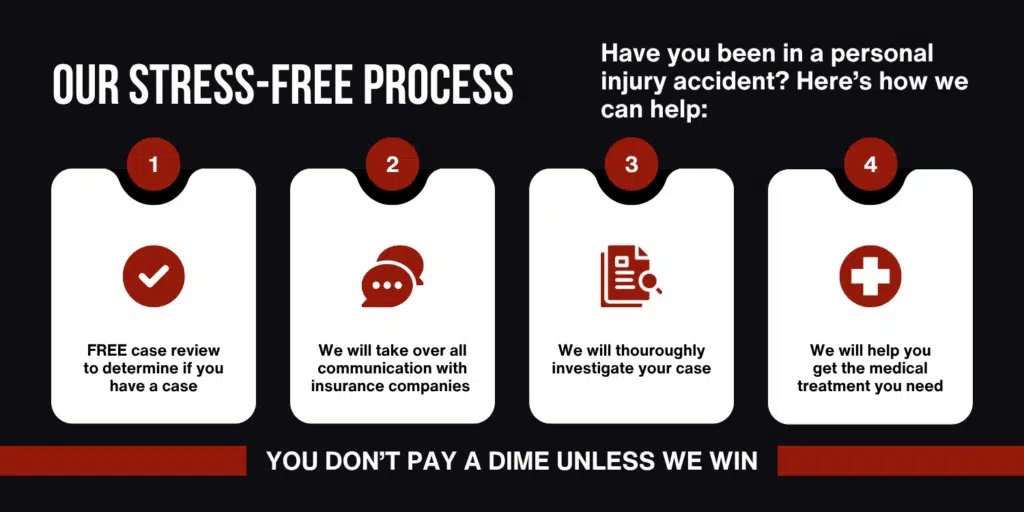
At MKP Law Group, LLP, our attorneys are experienced in fighting for victims of assault and battery. For years, we have fought on behalf of clients who have suffered injury from the emotional and physical trauma of these attacks. We realize that it can be difficult to afford a quality and experienced assault and battery lawyer, so we always work on what is known as a contingency fee basis, meaning WE DON’T GET PAID UNLESS WE WIN.
There are no upfront, out-of-pocket costs to our clients. Our experienced attorneys advocate for and represent victims of assault and battery cases. We have recovered millions on behalf of our injury clients and will fight hard on your behalf to ensure you get maximum compensation for your injuries.
We want to help you recover and manage the significant financial, physical, and emotional challenges that accompany your injuries. Our Los Angeles battery and assault injury lawyer group works with a team of specialized medical experts throughout Los Angeles and California to ensure that you or a loved one receives top-notch medical care for a speedy and healthy recovery while we deal with the case.
ARE YOU OR A LOVED ONE CURRENTLY A VICTIM OF ASSAULT OR BATTERY? IF SO, CALL US IMMEDIATELY AT 310-870-3395.
If you decide to move forward with working with our team at MKP Law Group, LLP, a skilled attorney for assault victims will be assigned and dedicated to your case.
Our team represents injury victims throughout the state of California. We at MKP Law Group, LLP strive to make the process and legal procedures as easy as possible for you. For experienced, attentive, dependable, and tenacious representation call us today at 310-870-3395 to schedule your 100% free consultation.
Understanding Your Rights as an Assault & Battery Victim
Has someone intentionally harmed you or threatened you with violence in Los Angeles? As a victim of assault and battery, you have significant legal rights that extend beyond criminal prosecution. Understanding these rights is the first step toward receiving the compensation and justice you deserve.
At MKP Law Group, LLP, we believe informed clients make better decisions. That’s why we’re committed to helping you understand your legal options clearly and comprehensively.
California’s Strict Liability Laws for Physical Injuries
California law strongly protects victims of intentional harm. Unlike negligence cases where fault can be shared, California applies “strict liability” principles in many assault and battery situations. This means the person who harmed you can be held fully accountable for your injuries regardless of other circumstances.
For battery cases specifically, California Civil Code §1708.5 allows victims to seek compensation without having to prove the attacker intended to cause the specific harm that resulted. Our experienced attorneys know how to leverage these laws to build the strongest possible case for your compensation.
Time Limitations for Filing Assault & Battery Claims
Acting promptly after an assault or battery incident is crucial to protecting your rights. In California, most assault and battery civil claims must be filed within two years of the incident. This legal deadline, known as the “statute of limitations,” can permanently bar your right to compensation if missed.
Certain exceptions may apply that could extend this timeframe, particularly for minors or in cases of domestic violence. Don’t risk losing your right to compensation—contact our Los Angeles assault and battery lawyers immediately to ensure your claim is filed properly.
Criminal Prosecution vs. Civil Compensation
Many assault and battery victims don’t realize they can pursue both criminal and civil cases simultaneously. These legal pathways serve different purposes:
Criminal cases are prosecuted by the state against the attacker, seeking punishment through fines or imprisonment. While this may deliver justice, it typically doesn’t provide financial compensation to victims.
Civil cases are initiated by you (the victim) against the attacker, seeking financial compensation for your injuries and losses. This path focuses on making you whole again financially.
Our attorneys at MKP Law Group, LLP work alongside criminal prosecutors to ensure both justice and maximum compensation. Remember, even if a criminal case doesn’t result in a conviction, you may still prevail in your civil case due to the lower burden of proof required.
Why You Need an Assault and Battery Lawyer in Los Angeles
Has someone intentionally threatened to injure you, menaced you, physically injured you, or traumatized you by suggesting violence?
If so, you are a victim of assault and, possibly, battery, and you have legal rights.
Victims of battery and assault don’t only suffer physical damages. Often, there is severe psychological and emotional trauma that can be even more damaging and lasting.
This unlawful trauma is wrong.
Most victims of assault and battery wrongly believe that criminal prosecution against the individual who committed the assault or battery is the only justice afforded to them. Victims are often surprised to learn that they can file a civil suit, in addition to the criminal case, against their attacker.
At our law firm, we want to be the people to help you through this difficult time and right those wrongs.
Victims have the right to receive damages following these crimes So, if you or a family member is the victim of an assault and battery case, you need to contact MKP Law Group, LLP in Beverly Hills today. Our attorneys are ready to vigorously pursue justice for you.
California Law: Differences Between Assault and Battery Cases

Assault and battery are often used interchangeably but they are actually distinct legal concepts and are treated as separate causes of action under California law. Both are types of intentional torts, which are distinct from negligent torts where the wrongful actor’s conduct is unintentional, but they deal with two different types of wrongful conduct. Intentional torts require the plaintiff to prove that the defendant intentionally tried to harm the victim.
Here are the descriptions and some examples of assault and battery:
Assault: Assault is an intentional act that causes fear of impending harm. There does not need to be actual, physical contact in order for a victim to bring a lawsuit for assault. An example of an assault would be someone pointing a gun at you, which could constitute assault with a deadly weapon, or raising their fists and threatening to hit you. The threat of physical contact can be real or implied.
Battery: Battery occurs when there is actual physical contact that causes bodily harm. If an assault is the threat of harmful contact, the battery is the actual harmful strike or contact. Almost every battery also entails an assault, and both are intentional acts.
Multiple Party Assault and Battery Cases
There are arguments that defendants, the person accused of committing an assault or battery, can make as part of their defense strategy that serve as valid excuses for their conduct.
Common defenses and situational examples of assault and battery cases include:
Consent: If the victim of an assault or battery agreed to the harmful or offensive contact beforehand, then they will likely lose their assault and battery case.
Example: A boxer who agrees to a fight consents to the possibility of being injured during the boxing match and therefore cannot sue his opponent for any damages sustained in the fight.
Privilege: Privilege is a right or advantage gained as a result of a position.
Example: Police officers attempting to break up a fight or enforce an arrest warrant may technically commit an assault or battery through their use of force, but their actions would be considered privileged if they used a reasonable amount of force during the course and scope of their employment. However, an off-duty officer who gets into a fight unrelated to their official duties would not be able to claim the defense of privilege.
Self-Defense/Defense of Others: If a person is acting in self-defense or in the defense of others in responding appropriately to a threat of harm, such actions may absolve the actor of any liability for an assault or battery.
The use of force must be reasonable, meaning it is not excessive and was done in response to a real threat of danger.
Common Arguments of Assault and Battery Defendants
There may be instances where there are multiple parties that can be held responsible for injuries sustained in an assault or battery.
The most obvious defendant in an assault or battery case is the individual person who commits the act of violence or threatens to commit violence. However, third parties like businesses, bars, and other businesses may also be liable for injuries sustained in an assault and battery if they failed to provide adequate security or otherwise reduce the risk of an attack.
Do Assault and Battery Cases Go to Civil or Criminal Court?
Oftentimes the person committing an assault or battery can face two lawsuits simultaneously, a criminal case and a civil case.
The definitions of assault and batteries differ state-to-state but each is a crime that can be prosecuted by the state seeking to impose criminal charges on the wrongful actor.
A civil case, brought by the victim of an assault or battery, can be filed in civil court and occur at the same time as the criminal case. Unlike a criminal case that deals with criminal charges, a civil case brought by the victim is to recover monetary damages to compensate the victim for injuries and losses caused by the assault or battery.
While it is the state that determines whether to bring a criminal case, which the perpetrator may fight with a criminal defense attorney, the victim gets to decide whether to bring a civil suit for damages stemming from an assault or battery, usually by hiring an assault and battery lawyer.
Civil cases and criminal cases have different burdens of proof. The burden of proof is the level of proof a party must establish in order to win their case.
The burden of proof in criminal courts is beyond a reasonable doubt, which is a much higher burden to satisfy than the civil standard of preponderance of the evidence. The preponderance of the evidence is met whenever the party demonstrates by more than a 50% chance that the defendant committed or intended to commit the assault or battery.
What Damages Can Attorneys Recover for Battery and Assault Victims?

Assault and batteries can produce serious physical injuries that can last a lifetime, as well as serious psychological trauma.
Common injuries sustained by victims in an assault and battery include:
- Fractured bones
- Lacerations
- Bruises
- Back & Neck Injuries
- Torn Ligaments
- Traumatic Brain Injuries
- Death
The damages that a victim of assault or battery can recover are the same types of damages that can be recovered in any personal injury case which include the following:
- Medical Expenses: Victims are entitled to full reimbursement for all medical bills and expenses stemming from an assault and battery including ER bills, prescription drug costs, physical therapy, expenses for medical equipment and devices. Victims can recover damages for future medical bills as well.
- Lost Wages/Earnings: If the victim missed work and lost income as a result of the assault or battery they can recover those lost earnings in a civil lawsuit. These damages include the loss of future wages, or diminished earning capacity, as well as for actual, past lost wages.
- Pain & Suffering: Pain and suffering, or general damages, are not quantifiable with an exact dollar amount. Instead, they stem from the loss of enjoyment of life, physical pain, and suffering, inconvenience, difficulty performing daily activities or household tasks, loss of dignity, and inability to engage in hobbies or recreational activities.
- Punitive Damages: Punitive damages are only awarded in extreme cases where the defendant acted with malice, oppression, or reckless disregard for the safety of others in order to punish the defendant and deter similar, future behavior.
Contact MKP Law Group, LLP Today for Your Own Attorney for Assault Victims in Los Angeles
MKP Law Group, LLP is here to stand up to those who break the law and cause trauma and injury.
We represent battery and assault victims and will stand by them to ensure they get the compensation they deserve for their injuries.
Choosing one of our assault and battery lawyers in Los Angeles will provide you with a dedicated team who will work tirelessly to win your case. Unlike many law firms, we exclusively handle personal injury cases and we have a proven track record of obtaining results for our clients. We know how to aggressively deal with cases involving physical, emotional, and traumatizing abuse in order to obtain optimal settlements.
When the at-fault party is not willing to accept responsibility for their negligence, MKP Law Group, LLP has a team of experienced trial attorneys who will hold the at-fault party responsible in a court of law. If you, a loved one, or someone you know has suffered from battery or assault, call MKP Law Group, LLP today at 310-870-3395 to schedule your free consultation. If you work with MKP, you will not pay any fees unless we win your case.

FAQs
What is the difference between simple and aggravated battery?

In California, simple battery and aggravated battery are distinguished by several factors including severity, circumstances, and potential penalties. Simple battery generally involves less serious unwanted contact, while aggravated battery typically involves more serious injury, often charged as a felony, or special circumstances such as the victim’s identity or relationship to the accused. The legal classifications and potential consequences vary significantly between these charges, ranging from a misdemeanor to serious prison time, with aggravated battery potentially carrying more severe penalties.
How much does an assault lawyer cost in Los Angeles?
At MKP Law Group, LLP, we represent assault and battery victims on a contingency fee basis. This arrangement means clients don’t pay upfront costs for our legal services. Instead, attorney fees are calculated as a percentage of any compensation recovered. If there is no recovery in your case, you don’t owe attorney fees. This approach allows individuals to access legal representation regardless of their current financial situation, letting them focus on recovery while we handle the legal aspects of their case.
We represent battery and assault victims and will stand by them to ensure they get the compensation they deserve for their injuries.
Can I sue someone for assault and battery in California?
Yes. In addition to any criminal charges brought by the state, victims of assault and battery may file a civil lawsuit against the person responsible. A civil claim allows you to pursue compensation for medical expenses, lost wages, pain and suffering, emotional distress, and other damages caused by the attack. An experienced Los Angeles assault and battery lawyer can evaluate your case and explain your legal options.
How much can I sue for after an assault and battery?
The value of an assault and battery claim depends on the severity of your injuries, the cost of your medical treatment, lost income, emotional trauma, and the long-term impact the incident has had on your life. In some cases, punitive damages may also be available if the defendant acted with malice or extreme misconduct. Every case is unique, so it’s important to speak with an attorney about the potential value of your claim. Contact MKP Law Group to get your free case evaluation today.
What counts as assault under California law?
Under California law, assault occurs when someone intentionally acts in a way that causes another person to reasonably fear imminent harmful or offensive contact. Physical contact does not have to occur for an assault claim to exist. For example, threatening someone while appearing capable of carrying out the threat may qualify as assault, even if no injury ultimately occurs.
Can I file a civil lawsuit even if criminal charges were never filed?
Yes. A civil assault and battery claim is separate from a criminal case. Even if prosecutors decide not to file criminal charges, or if the defendant is acquitted, you may still be able to pursue financial compensation through a civil lawsuit. Civil cases have a lower burden of proof than criminal cases, making it possible to recover damages even when there is no criminal conviction.
Can self-defense be used as a defense in an assault and battery case?
Yes. Self-defense is one of the most common defenses raised in assault and battery cases. However, California law generally requires that the force used be reasonable and proportional to the threat. If the defendant used excessive force or was not acting in response to an actual threat, they may still be held legally responsible for the injuries they caused.
Can a business or property owner be held responsible for an assault?
In some situations, yes. If an assault occurred because a business, apartment complex, bar, hotel, or other property owner failed to provide reasonable security, they may also be liable for your injuries. Depending on the facts of the case, multiple parties, not just the attacker, may be responsible for compensating victims of assault and battery.
What damages can I recover in an assault and battery lawsuit?
Victims of assault and battery may be entitled to compensation for medical bills, future medical treatment, lost wages, reduced earning capacity, pain and suffering, emotional distress, and other losses related to the attack. In especially egregious cases, California courts may also award punitive damages to punish the wrongdoer and discourage similar conduct in the future.
How do I choose the best assault and battery lawyer in Los Angeles?
When choosing an assault and battery lawyer, look for a firm that focuses on representing injury victims, has experience handling intentional injury cases, and offers free consultations with no upfront fees. You should also consider the firm’s results, client reviews, trial experience, and willingness to fight for maximum compensation. At MKP Law Group, LLP, we represent assault and battery victims on a contingency fee basis, meaning you pay no attorney fees unless we recover compensation for you.
Updates Log:
- Published December 25 2024
- Updated July 2026
- Lightly updated August 2026