 Trusted Content
Table of Contents
Here to Serve Victims of Drunk Driving Accidents
When a drunk or impaired driver causes a collision, an injured person may have a personal injury claim against the driver and, in some circumstances, other responsible parties. Compensation may include medical expenses, lost income, property damage, pain and suffering, and other losses resulting from the accident.
A drunk driving accident claim is separate from the criminal DUI case against the driver. Prosecutors handle the criminal case, while an injured victim can pursue a civil claim for compensation.
MKP Law Group, LLP represents people injured by drunk and impaired drivers. If you or a loved one was injured in a drunk driving accident in Los Angeles, contact our attorneys for a free consultation.
Key Takeaways
- A drunk driving accident can result in both a criminal DUI case and a separate civil injury claim. An injured victim can pursue compensation regardless of the government’s separate prosecution of the driver.
- The drunk driver may not be the only potentially liable party. Depending on the circumstances, another person, a vehicle owner, an employer, or certain alcohol providers may also bear responsibility.
- DUI evidence can be important, but an injury claim still depends on evidence showing liability, causation, injuries, and damages. Police records, witness statements, video, medical records, and other evidence may all play a role.
- Compensation can include medical expenses, lost income, property damage, pain and suffering, and other recoverable losses. Some drunk driving cases may also support punitive damages.
- California generally gives injured people two years to file a personal injury lawsuit, but different or shorter deadlines can apply in some circumstances.
- MKP Law Group represents victims of drunk driving accidents, not drivers facing DUI charges. Our personal injury cases are handled on a contingency-fee basis.


At MKP Law Group, LLP, our attorneys exclusively represent injury victims. For years, we have fought on behalf of clients hurt in drunk driving accidents due to another party’s negligence. We realize that it can be difficult to afford quality Los Angeles drunk driving lawyers, so we always work on what is known as a contingency fee basis, meaning WE DON’T GET PAID UNLESS WE WIN. Call 323-524-9619 for a free consultation.
There are no upfront, out-of-pocket costs to our clients. Our experienced personal injury attorneys have recovered millions on behalf of our clients and will fight hard on your behalf to ensure you get maximum compensation for your injuries. Our lawyers work with a team of medical experts in the Los Angeles area and throughout California to ensure that you or a loved one receives top-notch medical care for a speedy and healthy recovery, while we deal with the legal side.
We are a team of renowned drunk driving accident attorneys representing victims of drunk driving accidents throughout the State of California. MKP Law Group, LLP’s team strives to make the process as easy and quick as possible for you. Our experienced team is attentive, dependable, and tenacious, so call us today at 310-870-3395 to schedule your 100% free case evaluation.
Why Hire Our Los Angeles Drunk Driving Accident Lawyers?
Anytime we get in a vehicle, we are responsible for following the laws and driving safely. As legal drivers, we have a duty of care to other drivers on the road. Many factors can cause accidents, but drivers who choose to drive while intoxicated (DWI) or drive under the influence (DUI) of drugs and alcohol directly cause unsafe situations. These irresponsible driving instances can cause life-changing and devastating consequences.
This negligent act is discouraged in every way possible by law enforcement and many other entities. However, it does not guarantee accident victims will receive just compensation for their damages.
At our law firm, we want to be the people to help you to get what you’ve lost as a drunk driving accident victim. So, if you or a family member is the victim of an accident due to a drunk driver’s negligence, you need to contact MKP Law Group, LLP in Los Angeles today. Our attorneys are ready to vigorously pursue justice for you.
What Should You Do After a Drunk Driving Accident in Los Angeles?
Every year, drunk and intoxicated drivers cause car accidents that impact thousands of people across California. According to the National Highway Traffic Safety Administration, drunk driving crashes result in 29 fatalities per day in the United States; that equates to a drunk driving death every 50 minutes. After an auto accident caused by a motorist driving while intoxicated, there are several steps you should take to bolster your injury claim.
After a suspected drunk driving accident, your immediate priorities should be safety, medical care, reporting the collision, and preserving evidence.
If you are able to do so:
- Call 911. Report the accident and tell responding officers about any behavior you personally observed that may indicate the other driver was impaired.
- Seek medical treatment. Some accident injuries may not be immediately apparent.
- Photograph the accident scene. Take pictures of vehicle damage, license plates, road conditions, debris, traffic signals, skid marks, and visible injuries.
- Get witness information. Independent witnesses may have seen the other driver’s behavior before the crash.
- Exchange insurance and contact information.
- Save accident-related documents. Keep medical records, bills, repair estimates, wage records, receipts, photographs, and insurance correspondence.
- Be careful about signing an insurance release. Understand what rights you may be giving up before accepting a settlement.
Evidence can disappear quickly after an accident. Surveillance footage may be overwritten, vehicles may be repaired, and witnesses can become difficult to locate.
DWI and DUI Laws in Los Angeles
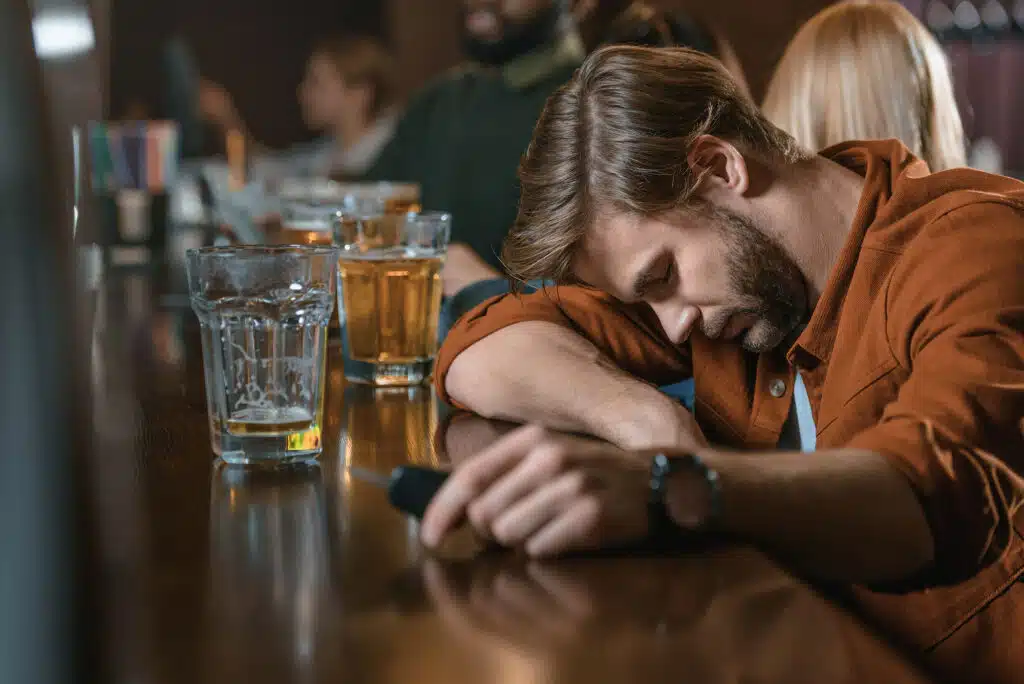
In Los Angeles County, drivers who use a motor vehicle while under the influence of drugs or alcohol face stiff penalties for their dangerous conduct.
It is illegal to drive with a blood alcohol concentration, “BAC,” or blood alcohol content, over the legal limit of 0.08. Drivers driving with these BAC levels can be charged and convicted for driving under the influence, also referred to as “DUI.”
For people under the age of 21, zero tolerance laws make it illegal to drive with any measurable amount of alcohol in their systems. That means if they are caught with alcohol measured at a BAC of 0.01 or higher, they can be convicted of a DUI.
DUI arrests and convictions lead to a variety of severe penalties. These penalties are based on the severity of the results of a field sobriety test (FSTs) and whether it was the driver’s first offense. Field sobriety tests happen on-site after an intoxicated driver is pulled over and usually involve a breathalyzer.
Common DUI penalties include:
- Loss of driving privileges (e.g., driver’s license suspension or revocation)
- Jail time
- Monetary fines
Under DUI laws in Los Angeles and California, criminal charges can be brought against a drunk driver pursuant to California Vehicle Code Section 23152(a).
DUI offenses also include driving under the influence of drugs, either illicit or prescribed. These types of offenses are brought against intoxicated drivers pursuant to California Vehicle Code Section 23152(f).
Sometimes, people who drive under the influence of alcohol or drugs may face misdemeanors rather than more serious charges. This is especially true if it was a first-time offense. Whereas, more serious DUI offenses for repeat offenders can lead to felony DUI charges.
Laws regarding intoxicated driving vary state-to-state. The term’s driving under the influence “DUI” and driving while intoxicated (“DWI”) are largely interchangeable. The formal criminal charges will depend on what state the motor vehicle accident occurred in.
How Does a Drunk Driving Accident Claim Differ From the DUI Criminal Case?
A criminal DUI prosecution and a drunk driving personal injury claim are separate legal proceedings with different purposes.
California Vehicle Code section 23152 prohibits driving under the influence and separately prohibits driving with a blood alcohol concentration of 0.08% or more.
The criminal case is brought by the government and can result in criminal and driver’s-license consequences for the accused driver.
A civil claim is brought by the injured person and focuses on issues such as:
- Who caused the collision
- Whether the defendant was negligent
- Whether that conduct caused the victim’s injuries
- What losses resulted from those injuries
- Whether another person or business shares responsibility
- What insurance coverage is available
Evidence developed during the DUI investigation may become useful in the civil case, but the two proceedings are not the same.
Does a DUI Automatically Make the Other Driver Liable for an Accident?
Not necessarily. Evidence that a driver was intoxicated can be important, but an injured person still needs evidence connecting the driver’s conduct to the collision and resulting injuries.
California recognizes the doctrine of negligence per se. Under California’s civil jury instructions, violation of a law can create a presumption of negligence when the requirements of the doctrine are satisfied, including that the violation was a substantial factor in causing the harm.
Negligence per se is not a separate type of lawsuit. It is a way in which violation of a safety law may affect the negligence analysis.
For example, evidence that a driver was impaired may be considered alongside evidence that the driver crossed the center line, ran a red light, rear-ended another vehicle, failed to yield, or otherwise caused the collision.
What Evidence Is Important in a Drunk Driving Accident Claim?
A strong drunk driving accident claim may depend on evidence establishing both how the collision happened and the extent of the victim’s injuries and losses.
Important evidence may include:
- The police traffic collision report
- Breath or blood alcohol test results
- Officer observations
- Field sobriety test evidence
- Police body-camera or dash-camera footage
- 911 recordings
- Witness statements
- Surveillance and dashboard-camera footage
- Photographs of the scene and vehicles
- Statements made by the driver
- Criminal court records
- Medical records and bills
- Employment and wage records
- Vehicle data when available
An attorney may also investigate evidence that does not appear in the initial police report.
What Happens if the Drunk Driver Refuses a Breathalyzer?
A refusal to submit to chemical testing does not necessarily prevent an injured person from pursuing a personal injury claim.
Evidence of intoxication can come from sources other than a breath or blood test. Police observations, witness statements, video footage, the driver’s behavior, driving patterns, physical evidence, and the driver’s own statements may all be relevant.
The significance and admissibility of a refusal can depend on the circumstances of the particular case.
Who Can Be Sued in a Drunk Driving Accident?
The drunk driver is usually the primary defendant, but other parties may sometimes share responsibility for a drunk driving accident.
Identifying every potentially liable party can be particularly important when an accident causes catastrophic injuries or the impaired driver’s insurance coverage is insufficient.
The Drunk Driver
A driver who negligently causes an accident can be held responsible for the injuries and damages resulting from the collision.
Evidence that the driver was under the influence of alcohol or drugs can become an important part of establishing what happened.
The Vehicle Owner
In some circumstances, a vehicle owner may be responsible even though someone else was driving.
Potential theories can include permissive-use liability and negligent entrustment, depending on issues such as ownership, permission to use the vehicle, and what the owner knew about the person driving.
The Driver’s Employer
An employer may sometimes bear responsibility when an employee causes an accident while acting within the scope of employment.
Whether an employer is liable depends heavily on the circumstances. An investigation may consider where the employee was going, why the trip was being made, and how the driving related to the employee’s work.
Bars, Restaurants, and Other Alcohol Providers
California generally limits lawsuits against businesses and people who furnished alcohol to someone who later caused an accident.
One significant statutory exception can apply when a licensed provider furnishes alcohol to an obviously intoxicated person under 21 and the other requirements for liability are satisfied.
This is a narrow exception. A bar or restaurant is not automatically liable merely because it served alcohol to an adult who later caused a collision.
Social Hosts
California also generally protects social hosts from liability for injuries resulting from another person’s consumption of alcohol.
An exception can apply when a parent, guardian, or other adult knowingly furnishes alcohol at the adult’s residence to a person the adult knows or should know is under 21.
Whether someone other than the drunk driver can be held liable therefore requires careful review of the facts.
What Compensation Is Available After a Drunk Driving Accident?
A person injured by a drunk driver may be entitled to compensation for the economic and noneconomic losses caused by the accident.
Depending on the circumstances, damages may include:
- Medical expenses
- Future medical treatment
- Lost wages
- Loss of future earning capacity
- Property damage
- Pain and suffering
- Emotional distress
- Other accident-related losses
If a drunk driving accident causes a death, eligible surviving family members or other qualifying claimants may also be able to bring a wrongful death claim.
Can You Recover Punitive Damages From a Drunk Driver?
Punitive damages may be available in some drunk driving accident cases in addition to compensation for the victim’s losses.
Punitive damages differ from compensatory damages. Compensatory damages address losses suffered by the injured person. Punitive damages are designed to punish qualifying conduct and deter similar conduct.
California Civil Code section 3294 requires clear and convincing evidence of oppression, fraud, or malice before punitive damages may be awarded. Whether a particular drunk driving accident meets that standard depends on the facts and evidence.
Average Drunk Driver Settlement in Los Angeles
There is no single settlement amount that applies to every drunk driving accident in Los Angeles. The value of a case depends on the victim’s injuries, financial losses, insurance coverage, evidence, and circumstances surrounding the collision.
Factors that can affect a drunk driving accident settlement include:
- The severity of the injuries
- Whether the injuries are temporary or permanent
- Past and future medical expenses
- Lost income
- Reduced earning capacity
- Pain and suffering
- Property damage
- Available insurance coverage
- Whether liability is disputed
- Whether multiple parties are responsible
- Whether punitive damages may be available
You can try our car accident settlement calculator to get an estimate, but please note that drunk driving cases can involve issues that do not arise in an ordinary car accident claim. Evidence showing that a defendant knowingly drove while impaired may affect how the case is litigated and evaluated.
A lawyer can review the specific facts and available insurance rather than relying on an “average” settlement figure that may have little relationship to an individual case.
Rear-Ended by a Drunk Driver Settlement
A rear-end collision caused by a drunk driver can result in a personal injury claim, but the value depends on the injuries and circumstances rather than the direction of impact alone.
Rear-end accidents can cause neck injuries, back injuries, head injuries, soft-tissue injuries, and other trauma. Some people recover quickly, while others require ongoing treatment.
Relevant factors can include the force of the collision, vehicle damage, medical findings, duration of treatment, lost income, future medical needs, available insurance, and evidence of intoxication.
If a drunk driver rear-ended you, preserve photographs of both vehicles and obtain medical evaluation when appropriate. Vehicle damage and medical records can become important evidence when an insurer disputes the severity or cause of an injury.
Average Hit-and-Run Settlement
Hit-and-run settlement values also depend on the injuries, available insurance, and whether the responsible driver can be identified.
When a hit-and-run driver is located, an injured person may be able to pursue a claim against the driver and applicable insurance.
When the driver cannot be identified or does not have adequate insurance, uninsured motorist coverage may become especially important. Whether coverage applies depends on the insurance policy and circumstances of the accident.
A hit-and-run accident involving a suspected drunk driver can also create evidence issues because the driver may leave before police can perform a DUI investigation. Witness accounts, surveillance footage, vehicle descriptions, photographs, and prompt reporting can therefore be particularly valuable.
What if the Drunk Driver Is Uninsured or Underinsured?
A drunk driver’s lack of adequate liability insurance does not necessarily mean an injured person has no other potential source of compensation.
The injured person’s own automobile insurance may include uninsured motorist or underinsured motorist coverage, commonly called UM/UIM coverage.
Depending on the policy and circumstances, UM/UIM coverage may provide compensation when an at-fault driver has no insurance or does not carry enough insurance to cover the victim’s losses.
The accident should also be investigated for other potentially responsible parties and applicable insurance policies.
Common Injuries from Drunk Driving Accidents
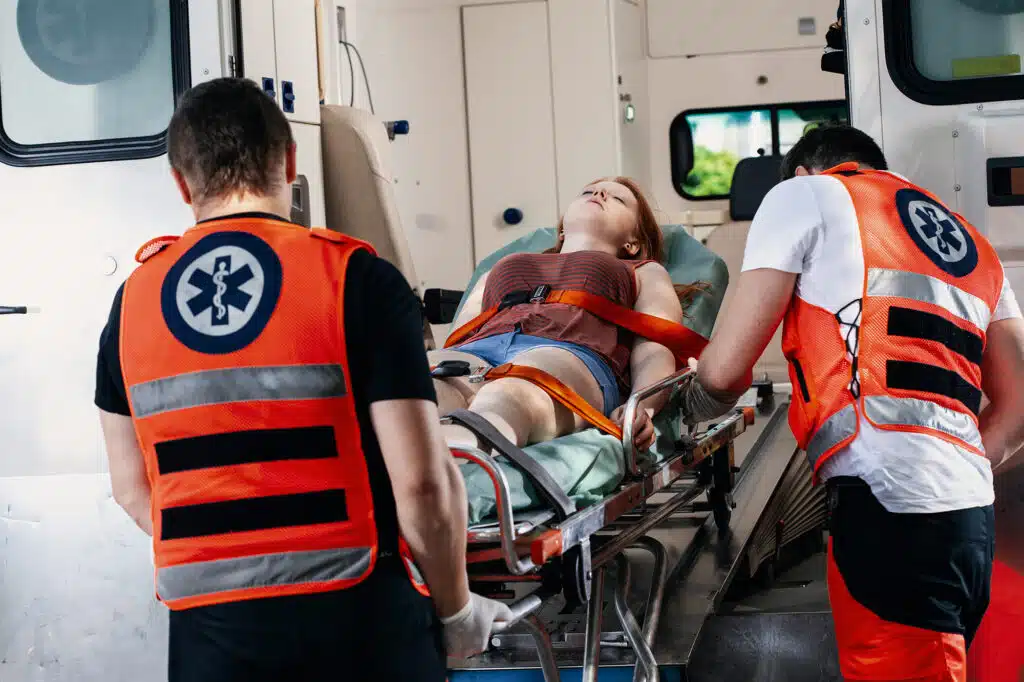
Drunk driving accidents can cause injuries ranging from soft-tissue trauma to catastrophic or fatal injuries.
Common injuries from serious motor vehicle collisions include:
Traumatic Brain Injuries
A blow or jolt to the head can cause a concussion or more severe traumatic brain injury. Symptoms can affect memory, concentration, balance, behavior, and the ability to work.
Neck and Back Injuries
Motor vehicle collisions can injure muscles, ligaments, discs, vertebrae, and other structures in the neck and back.
Spinal Cord Injuries
Severe trauma to the spinal cord can cause significant neurological impairment and, in the most serious cases, paralysis.
Broken Bones
Arms, legs, ribs, hips, facial bones, and other bones may fracture during a collision.
Internal Injuries
A serious impact can damage organs or cause internal bleeding that requires emergency treatment.
Soft-Tissue Injuries
Sprains, strains, and other injuries to muscles and connective tissue can cause pain and restricted movement.
Lacerations and Scarring
Broken glass and damaged vehicle components can cause cuts, scarring, and disfigurement.
Psychological Injuries
Some people experience anxiety, depression, post-traumatic stress symptoms, or other psychological effects after a serious accident.
Medical records documenting diagnosis, treatment, prognosis, future care, and physical limitations can become important evidence of damages.
Los Angeles Drunk Driving Statistics
California’s latest available Office of Traffic Safety city-ranking data show that 1,508 people were killed or injured in alcohol-involved crashes in the City of Los Angeles in 2023. OTS also reports 3,515 DUI arrests in Los Angeles that year.
2023 City of Los Angeles Alcohol-Involved Crash Statistics
| Measure | 2023 OTS data |
| Victims killed or injured in all fatal/injury crashes | 8,116 |
| Victims killed or injured in alcohol-involved crashes | 1,508 |
| Victims involving a drinking driver under 21 | 54 |
| Victims involving a drinking driver ages 21–34 | 735 |
| DUI arrests | 3,515 |
OTS compares Los Angeles with other California cities of similar population size. Its rankings should not be interpreted as a simple ranking of which city is “safest” or “most dangerous”; OTS uses population and vehicle-miles-traveled information as part of its traffic-safety comparison system.
Los Angeles County Drunk Driving Statistics
The numbers are substantially larger when looking at the entire county.
In 2023, 6,200 people were killed or injured in alcohol-involved crashes throughout Los Angeles County, according to OTS. Of those reported victims, 3,186 were associated with crashes involving a drinking driver between ages 21 and 34.
The city and county figures should not be added together because the Los Angeles County data include the City of Los Angeles.
These statistics also use specific OTS definitions. The “alcohol involved” figures represent victims killed and injured, not the number of individual drunk driving crashes or DUI convictions.
How Long Do You Have to File a Drunk Driving Accident Lawsuit in California?
California generally gives an injured person two years to file a personal injury lawsuit based on another person’s wrongful act or negligence.
The same general two-year limitations period applies to wrongful death actions based on another person’s wrongful act or neglect.
However, not every case follows the same deadline. Claims involving government entities, for example, can have much shorter claim-presentation requirements.
Waiting can also make a case more difficult to investigate even when the formal statute of limitations has not expired. Video can be erased, witnesses can become harder to find, and physical evidence can disappear.
What Can Strengthen a Drunk Driving Accident Claim?
A DUI arrest alone does not determine the outcome of a personal injury case. The strength of the available evidence matters.
Evidence that can help establish a claim may include:
- Documented alcohol or drug impairment
- Breath or blood test results
- Independent witness testimony
- Police observations
- Video showing the collision or the driver’s conduct
- Clear physical evidence establishing how the crash happened
- Prompt medical evaluation
- Consistent medical records
- Documentation of lost income and other financial losses
- Evidence connecting the defendant’s conduct to the injuries
Potential complications can include disputes over fault, allegations that the injured person contributed to the collision, conflicting witness statements, gaps in medical treatment, disputes over causation, or limited insurance coverage.
Why Hire Our Los Angeles Drunk Driving Accident Lawyers?
Drunk driving accident cases can involve issues beyond those found in an ordinary car accident claim, including evidence from a DUI investigation, multiple potentially responsible parties, insurance coverage questions, and possible punitive damages.
MKP Law Group can investigate the collision and pursue the people and entities responsible for your injuries.
Our work may include:
- Investigating the accident
- Obtaining available police and DUI investigation evidence
- Interviewing witnesses
- Preserving photographs, video, and other evidence
- Identifying potentially liable parties
- Reviewing available insurance coverage
- Documenting medical expenses and lost income
- Calculating other accident-related damages
- Communicating with insurance companies
- Negotiating for a settlement
- Filing a personal injury lawsuit when appropriate
MKP Law Group has the resources to track down potentially liable parties and pursue accountability for the harm caused by a drunk driving accident.
Our attorneys represent injured victims rather than drivers facing DUI charges. We offer free consultations and handle personal injury claims on a contingency-fee basis. You don’t pay an attorney fee unless we win a recovery for you.
Contact a Los Angeles Drunk Driving Accident Lawyer
If you or a loved one was injured by a drunk or impaired driver, MKP Law Group, LLP can review the circumstances and explain your options.
Our Los Angeles personal injury attorneys can investigate the accident, identify potentially responsible parties, evaluate available insurance coverage, document your damages, and pursue compensation on your behalf.
We offer a free consultation, and our personal injury cases are handled on a contingency-fee basis. You don’t pay a dime unless we win.
Contact MKP Law Group today to discuss your drunk driving accident claim.

FAQs
Do I Need to Hire a Los Angeles DUI Lawyer if a Drunk Driver Hit Me?

If you were injured by a drunk driver, you generally need a personal injury attorney rather than a criminal DUI-defense attorney.
A DUI-defense lawyer represents the accused driver in the criminal proceeding. A personal injury lawyer represents the injured person in the civil claim for compensation.
MKP Law Group represents accident victims.
Who Can Be Sued in a Drunk Driving Case?
The drunk driver is usually the primary defendant, but other parties may sometimes be liable.
Depending on the facts, potential defendants may include a vehicle owner, employer, or certain alcohol providers. Each theory of liability has its own requirements.
Is a Lawyer Worth It After a Drunk Driving Accident?
An attorney can be particularly useful when injuries are serious, liability is disputed, insurance coverage is limited, multiple parties may be responsible, or punitive damages may be an issue.
An attorney can also preserve evidence, communicate with insurers, investigate coverage, document damages, and pursue a lawsuit when necessary.
Does a DUI Conviction Automatically Prove My Personal Injury Case?
No. DUI evidence may be important, but an injured person still must establish the elements necessary for civil liability and prove the claimed damages.
A DUI-related statutory violation may also affect the negligence analysis under California’s negligence-per-se doctrine when its requirements are satisfied.
Can I Sue a Drunk Driver Who Wasn’t Convicted of DUI?
Potentially, yes. A civil personal injury claim does not necessarily depend on a criminal DUI conviction.
Other evidence—including witness statements, video, police observations, unsafe driving, and physical evidence—may help establish negligence and causation.
Can I Sue a Bar That Served the Drunk Driver?
California generally does not impose civil liability on a bar simply because it served alcohol to an adult who later caused an accident.
California law contains a narrow exception involving the furnishing of alcohol to an obviously intoxicated person under 21 when the statutory requirements are met.
Can a Social Host Be Liable for a Drunk Driving Accident?
California generally limits social-host liability. An exception can apply when an adult knowingly provides alcohol at the adult’s residence to someone the adult knows or should know is under 21.
Can I Recover Punitive Damages After a Drunk Driving Accident?
Punitive damages may be available in some cases, but they are not automatic.
California requires the plaintiff to satisfy a higher legal standard before punitive damages can be awarded.
What if the Drunk Driver Refused a Breathalyzer?
A refusal does not necessarily prevent an injured person from proving a civil claim.
Police observations, witness testimony, video, unsafe driving behavior, statements, and other evidence may still help establish what happened.
What if the Drunk Driver Doesn’t Have Insurance?
Uninsured motorist coverage may provide another source of compensation, depending on the injured person’s policy and circumstances.
An attorney can also investigate whether another person or entity bears responsibility and whether additional insurance coverage exists.
How Much Is a Drunk Driving Accident Settlement Worth?
The value depends on the specific case rather than a standard average.
Important factors can include injury severity, medical expenses, future treatment, lost earnings, pain and suffering, insurance coverage, liability evidence, and whether punitive damages are potentially available. Contact us for a free case evaluation to get a better estimate.
How Long Do I Have to Sue a Drunk Driver in California?
The general California statute of limitations for a personal injury lawsuit based on another person’s wrongful act or negligence is two years.
Different deadlines or procedural requirements can apply in some cases, so the applicable deadline should be determined from the circumstances.